Add Pop and Help Pollinators
Late Summer Orange and Purple Flowers Add Pop to Your Garden and Help Pollinators
It’s late summer and your garden is fizzling. Today we learn how purple and orange flowers (a sizzling combo) can add pop to your yard. They also help pollinators. They provide forage for bees, butterflies, moths, birds, and beneficial insects, and are drought tolerant.
Purple and orange is one of my favorite color combinations. Both colors have a root base in red, but one is cool and one is warm, providing a great balance for each other. But not just aesthetically pleasing, these particular flowers all are beneficial to pollinators. Different flower shapes and color are known to provide niches for different pollinators. So the more variety, the better. The secret to attract pollinators is to make sure you have at last 5 of each plant species so that the pollinators can find the plant. All of these plants are drought tolerant to boot!
Groundcovers:
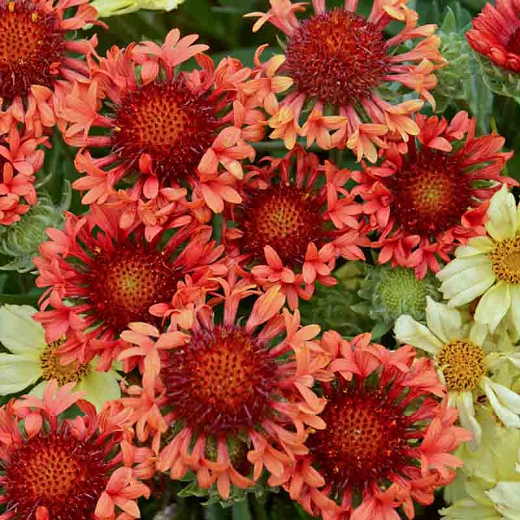
An orangey groundcover, Blanket Flower ‘Fanfare Blaze’ is a radial flower with dark centers and halos of lighter orange rays. These plants thrive in heat. Native to the U.S., I remember taking a trip to Texas and seeing them in mass along the freeway there. (They are often used for restoration because they help to stabilize soils through their root systems.) Blanket flowers provide food to bumbles bees, butterflies, moths, birds, and beneficial insects.
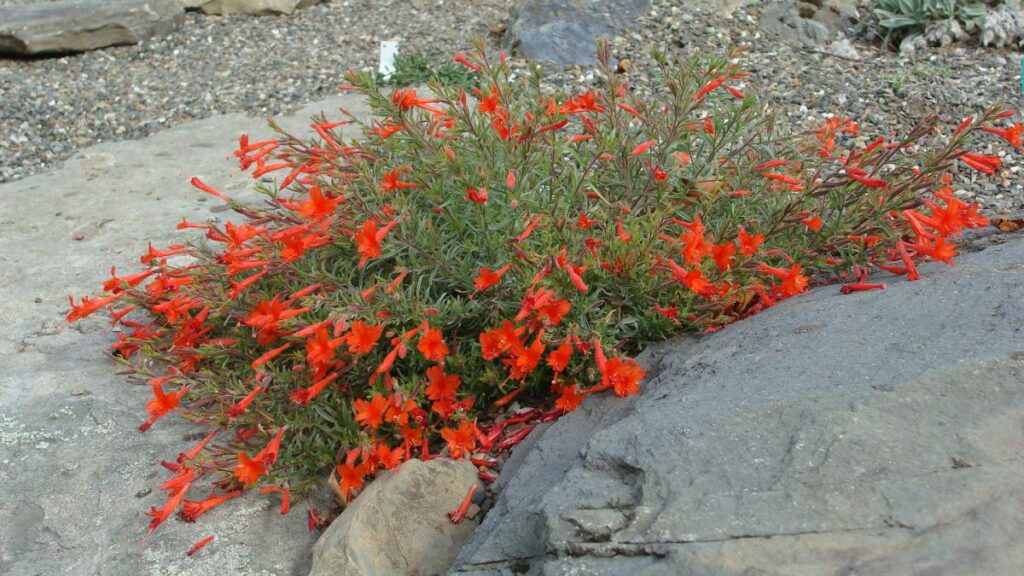
California Fuchsia has a tubular shape to its orangey or red flower. This is a hummingbird’s favorite shape to stick their beaks into. These native plants are striking when in mass. They can be anywhere from 6” – 3’ tall.
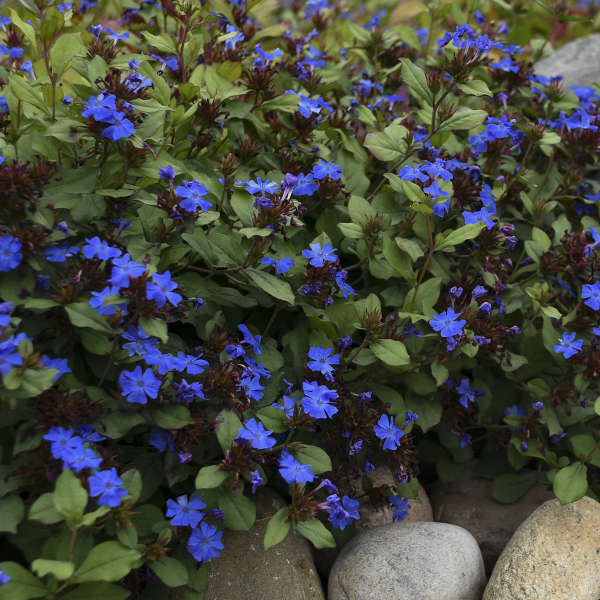
6-12” high Dwarf Plumbago is a groundcover with red fall foliage, gorgeous next to its cobalt blue flowers.
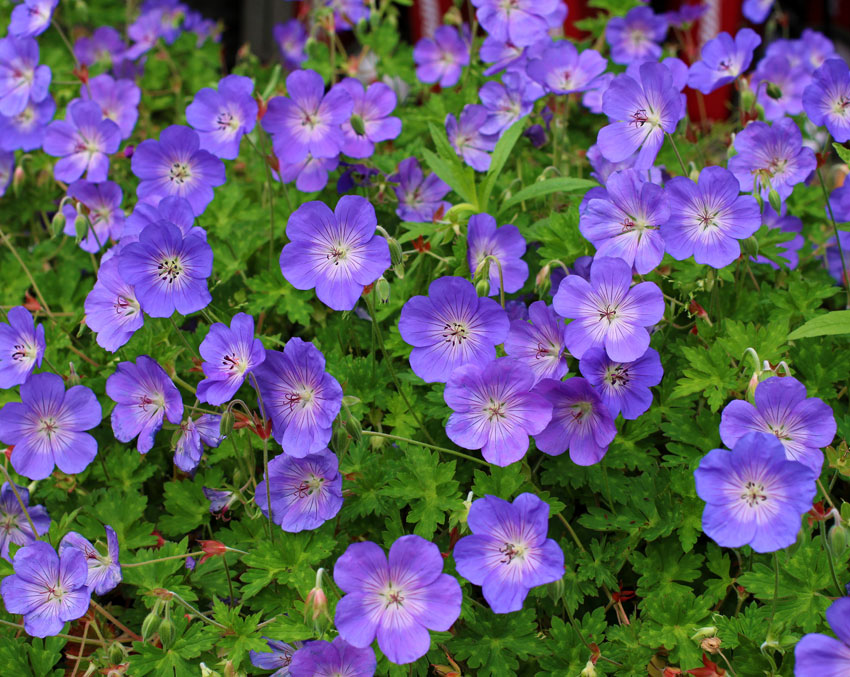
A taller groundcover is a true Geranium, named Geranium ‘Rozanne’. Its 5-petaled very symmetrical violet flower boasts a white “eye” that looks almost like a pansy.
Other Orange and Purple Flowers:
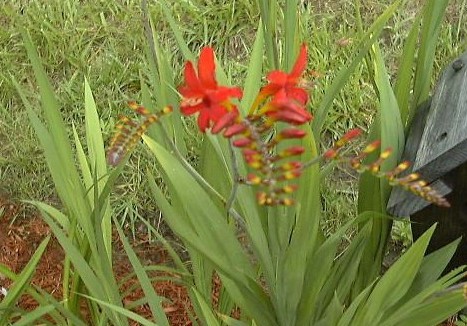
Montbretia is an old garden favorite which actually grows out of corms (similar to bulbs) and is a member of the iris family. Although these 3’ tall flowers are tubular, they grow in a flexuose (fancy word for zigzag) spike which arches. Even as I write this, I am looking outside my office window and see a hummingbird on mine. These delicate flowers are great for cutting, too!
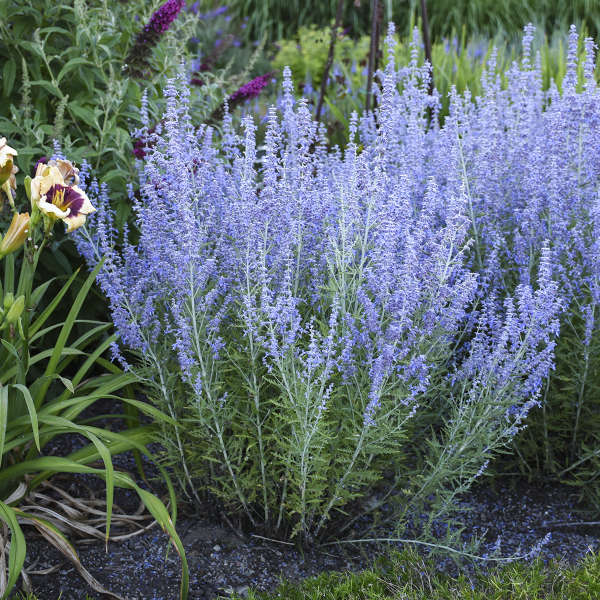
And lastly, we get to Russian Sage (Perovskia), which sometimes is mistaken for lavender. Varieties can grow anywhere from 1-4’ tall. Their blueish-purple flowers are quite stunning when paired with orange.
Their flower shape contrasts well with the Blanket Flower, providing forage for bees, butterflies, and hoverflies. If not cut down in the winter, their stalks can provide a place for birds to shelter overnight.
All are drought tolerant perennials which look great together. After many months of work at blooming, they do go down with the first frost. But don’t worry, they will sprout back up in the spring!
For more info, please go to our page on how to create a wildlife habitat in your backyard: Attract Pollinators to Your Yard