In a much earlier blog, we learned how to motivate ourselves to take care of our plants. Now that it’s late winter and almost spring, this is the time to prune!
Plants have hormones that respond to environmental stimuli
Plants don’t have brains; they “think” through their hormones. These hormones tell the plant what they are supposed to be doing right now. The hormones respond to environmental stimuli. At this time of year, longer day length and warming soil temperatures are natural signals from the Universe to get growing.
Obviously plants know how and when to do their own thing, so why do we want to get involved?
The exciting answer is that, through pruning, we can kick the plant’s butt into action and get it to start growing sooner than later. Even just nicking a plant’s stem above a bud is enough environmental stimulus to achieve this. I like to think that it gets the plants excited that they are getting attention.
What does the plant want to be doing right now?
At any time of year, I ask myself (and the plant!) what it wants to be doing right now. The answer is multiple choice: It either wants to grow roots, grow foliage, or grow flowers.
During the winter, plants and trees appear to be sleeping (dormant), but as long as the temperature is above freezing, they actually may be working on growing their roots, albeit slowly. Winter rains help plants to establish their root systems.
Pruning principles and tasks
Now, as spring approaches, we want the plant to move to its next stage: growing foliage. Here are some pruning principles and tasks to help make this happen:
Remember physics. For every action, there is an equal and opposite reaction. Translation: if you prune something on top, it will shoot out on the sides. If you prune the sides, it will shoot out on top.
Prune above a bud that is facing outward.
Remove dead wood at any time of year.
Prune trees and shrubs for structure and shape. Japanese maples should be pruned before their sap starts to run (which can attract insects). It’s best to prune fruit trees before they flower (which leads to developing fruit).
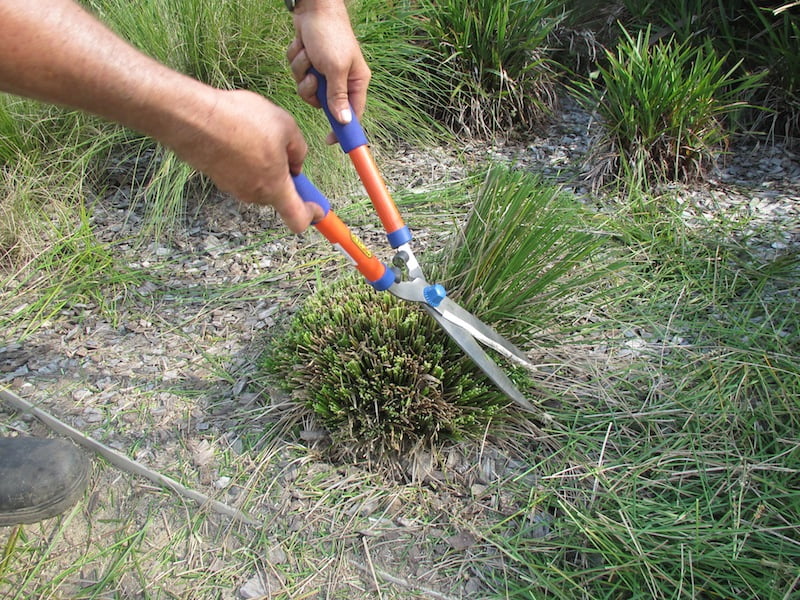
Grab ground covers and grasses “by the hair” and give ‘em a Mo and Curly haircut. This makes them burst out in all directions and reduces gangliness.
Stimulate plants that bloom on new wood (crape myrtles, certain hydrangeas, Rose-of-Sharon).
Roses love to be cut now. Try for a big V shape to improve air flow and shapeliness.
Just don’t prune spring flowering shrubs in late winter. Their flower buds are already set.
If you’re feeling sluggish about getting started, see our previous blog on how to get motivated! Most of all, have fun with it!